ESL pricing often prompts the same question first: "How much per label?"
A basic 2.13-inch black-and-white label ranges from 15 to 80 yuan depending on the supplier. A 20,000-SKU supermarket? Total project costs can fall anywhere from 500,000 to 3 million yuan. Same basic setup, wildly different numbers.
Visible Costs-The Bills You Can Directly See
Hardware Costs: Labels Are Just the Tip of the Iceberg
The electronic label itself is the core hardware expenditure. Here are the main factors that affect price.
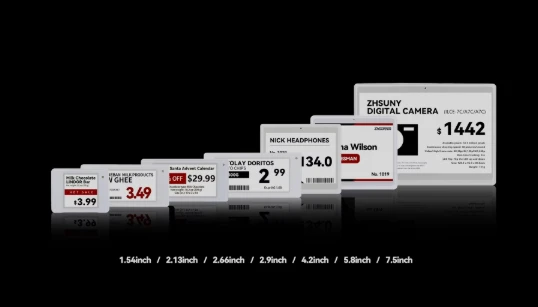
First, size matters a lot. Labels range from tiny 1.54-inch units up to massive 12.2-inch displays. Based on quotes from late last year, the small 1.54-inch ones were running 20 to 24 yuan on average. The 2.13-inch is what most supermarkets use for the bulk of their shelves-domestic brands were quoting 32 to 38 yuan for those. Once into the big stuff for fresh food and promos, 7.5 inches and up, prices reach 200+ yuan each, sometimes 350+ for imported brands. One procurement manager at an Eastern China chain ended up doing 75% small labels, 25% medium-to-large. "The big labels are mainly for the fruit and deli sections-customers can see the prices at a glance, and the effect is really good. Small labels are sufficient for the rest; no need to spend extra money."
Then there's the screen technology factor. E-ink is pretty much standard now-low power, looks like paper, all that. Black-and-white is cheapest. Black-white-red runs maybe 20% to 30% more depending on the supplier. Full-color E-ink though-quotes came in at four to five times the black-and-white price. Unless running some fancy boutique concept, tri-color is plenty.
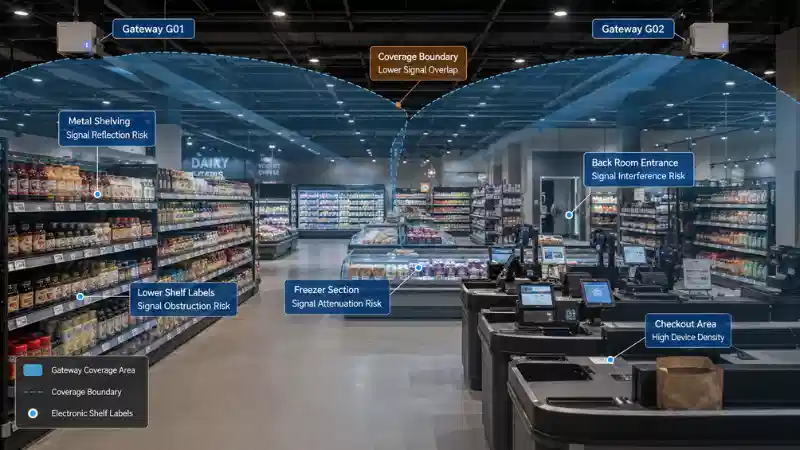
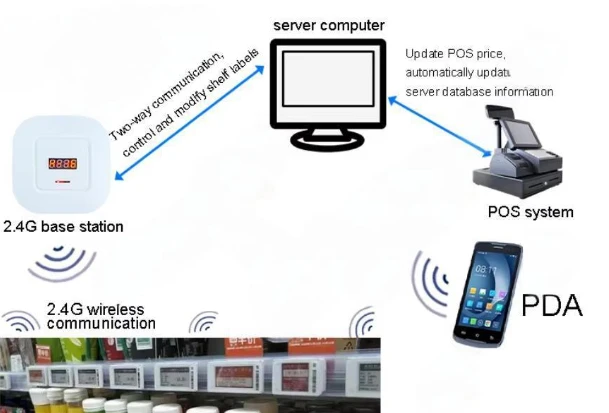
Communication protocols. Details about 2.4GHz versus Sub-1GHz, wall penetration, base station coverage-technical staff should sit in on the supplier demos. Different protocols affect how many base stations are needed, which affects cost.
Base station costs exist. Quotes range from 800 to 3,000 yuan each.
Installation accessories: shelf rails, label clips, protective frames, etc. Budget around two yuan per label.
Software and System Costs
Labels are basically fancy paperweights without software. There's management software for label design, price pushing, device monitoring. Some suppliers bundle it, some charge separately.
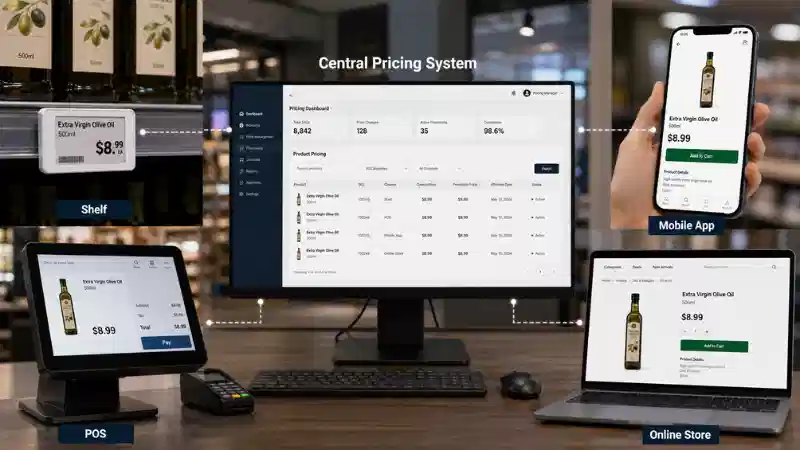
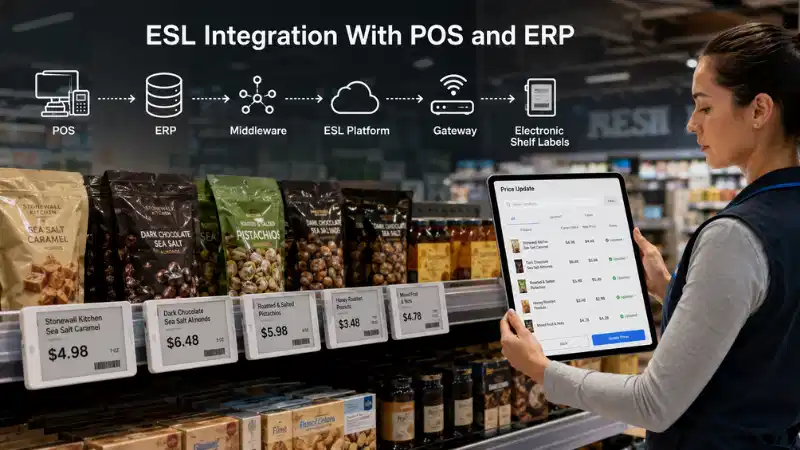
System integration-it can go wrong. ESL needs to talk to POS, ERP, promo systems. Legacy systems are a nightmare. More on this in the hidden costs section, where the real horror stories are.
Cloud fees, SaaS stuff-exists, factor it in, ask the supplier.
Deployment and Implementation Costs
Installation labor runs about one yuan per label. Training costs exist. This section is straightforward and not where projects fail.
Hidden Costs-Where Projects Actually Go Wrong
Ongoing Operational Costs
Battery life gap. Every single supplier will say "five to ten years battery life." They're not lying exactly, but they're calculating based on one to two refreshes per day. One to two! What supermarket only changes prices once or twice a day?
Here's what actually happens. Tracking three supermarkets over three years-real data, not projections-with dynamic pricing, promotions, the fresh food section doing markdowns throughout the day, refresh rates reach seven, eight, sometimes twelve refreshes daily. Actual battery life? Cut their claims in half. Maybe worse.
Most ESL units have integrated batteries. When the battery dies, the battery isn't replaced. The entire label is replaced. That 30-yuan label becomes a recurring cost, not a one-time purchase. Suppliers hate when this comes up.
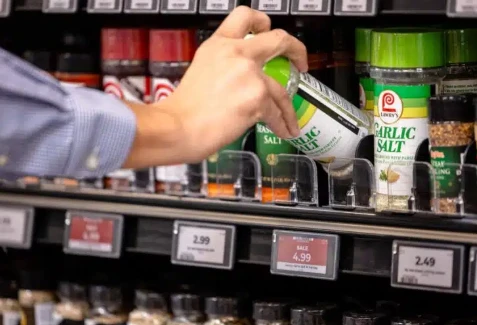
Loss and damage. Labels get knocked off by customers. Shopping carts hit them. Stock boys damage them during shelf resets. Theft happens-don't ask why anyone would steal an electronic price tag, but it happens.
The China Chain Store & Franchise Association-likely 2023, possibly late 2022-pegged the industry average annual loss rate at around 2%. For 20,000 labels at 30 yuan each, that's 12,000 yuan annually just in replacement. Every year. Forever.
One store had a 4% loss rate in its first year because the shelf layout created a high-traffic pinch point right where the dairy labels were. Little things like that-nobody warns about them.
Vendor Lock-in Risk
This issue doesn't get enough attention.
There are no industry standards. Zero. Every supplier has proprietary protocols, proprietary software, proprietary everything. Pick Supplier A, and it's a marriage to Supplier A. Want to switch to Supplier B three years later because they have better prices? Congratulations, the existing 20,000 labels are now electronic garbage. Complete system rebuild.
One regional chain tried to switch suppliers after a dispute over service response times. The migration quote was almost as much as starting fresh. They ended up staying with the original supplier, who-surprise-suddenly became much less responsive to their concerns.
What can be done about it? Negotiate data export rights upfront. Get interface documentation in the contract. Ask about API openness. Most importantly, assess whether the company will exist in five years. A lot of smaller ESL suppliers are burning through VC money with no path to profitability. If they go under, the hardware is orphaned.
Technology Obsolescence Risk
The technology is still moving fast. Color screens getting cheaper. Camera-based positioning emerging. Solar-powered units appearing. NFC integration. Whatever is purchased today will look dated in three to five years.
There are no great solutions here. Modular designs help if available. Leasing transfers some risk to suppliers. Mostly this is a rapidly evolving space and planning accordingly is necessary.
Project Failure Costs
Here's a disaster story.
Regional supermarket chain, about 40 stores, decided to go all-in on ESL. Big vendor, good reputation, seemed like a safe choice. They rolled out to all 40 stores simultaneously over three months.
Problems started immediately. Network planning was done from floor plans, not actual site surveys. Turns out their older stores had metal shelving that created dead zones the base stations couldn't penetrate. About 15% of labels in those stores just... didn't update reliably.
Integration with their legacy POS was a nightmare. The POS system was fifteen years old, running on what can only be described as digital duct tape. Every price push had a 3% error rate. Not 0.3%-3%. Worse than paper labels.
Store staff hated it. Training was two hours of PowerPoint. Nobody understood what to do when labels showed wrong prices. The default response became "just put a paper label over it," which defeated the entire purpose.
Six months in, they quietly started removing labels from their worst-performing stores. The project was never officially cancelled-it just stopped expanding. Last known status: about half the labels are still up, the other half are in boxes in back rooms.
Total investment: somewhere north of 3 million yuan. Total write-off: probably 2 million of that.
The lesson? Pilot first. Always pilot first.
Is ESL Really Worth It?
This section comes before procurement models because it's what everyone wants to know.
The Savings You Can Actually Count
Labor cost reduction is real and measurable. With paper labels, each price change means printing, cutting, walking to the shelf, finding the product, replacing the label. A skilled employee can change about 120 per hour under ideal conditions-more like 80 to 90 in reality, especially in crowded stores.
A supermarket with 20,000 SKUs, assuming 10% price changes weekly, that's 2,000 labels, requiring sixteen to seventeen hours of labor. At 25 yuan per hour, that's 400 yuan weekly, over 20,000 yuan annually. More frequent pricing means more savings. This math is solid.
Pricing error reduction matters more than people realize. In the paper label era, mismatches between shelf price and checkout price happened constantly. Customer complaints, refunds, regulatory fines in serious cases. Some retail survey-Nielsen or possibly McKinsey-put traditional supermarket pricing error rates at about 3%. ESL gets this below 0.1%. The actual savings depend on error-handling costs, but it's real money.
Dynamic pricing potential is the big one, but it's also the hardest to quantify because it depends entirely on whether the capability is actually used. Yonghui reportedly ran a pilot-exact numbers uncertain-but supposedly they cut fresh product waste significantly through dynamic pricing of near-expiry items, something like 30-40% reduction. The technology enables this; whether the value is captured depends on the pricing team's sophistication.
The Fuzzier Benefits
LED picking lights, inventory integration, customer experience, "digital transformation"-these benefits exist, but putting numbers on them is difficult. Vendors will show impressive statistics. Take them with a grain of salt.
Investment Payback Period Calculation
A simplified model for a medium-sized supermarket with 20,000 SKUs:
Total investment: approximately 1 million yuan
Annual operating costs: 110,000-120,000 yuan
Annual quantifiable benefits: approximately 200,000 yuan
Net annual benefit around 80,000 yuan, payback period roughly 12 years. Add in the fuzzy benefits and maybe it's seven or eight years.
Frankly, this payback period isn't short. Chain enterprises with scale do better. Standalone supermarkets should think carefully.
Life Cycle Cost Perspective
NPV analysis and discounting future cash flows are standard practice. Money in year five isn't worth money today, and ten-year projections should account for battery replacement cycles, technology refresh, and the general uncertainty of retail. Finance teams will know what to do with this.
Comparison of Procurement and Financial Models
One-time purchase: Pay upfront, own everything, lowest long-term cost, but heavy cash flow hit and all the obsolescence risk is retained.
Finance leasing: Spread payments over three to five years, tax-deductible rent, but total cost is maybe 20% higher. Understanding who owns the equipment at lease end is important.
RaaS model: Monthly subscription, everything included, almost no upfront cost. Most expensive over five years-maybe 50% more than outright purchase. But good for testing the waters.
Hybrid approaches exist. Government subsidies exist in some regions. Depreciation tax benefits exist. Finance teams should be involved for details.
Market Price Reality
By supplier tier: International brands like SES-imagotag and Pricer charge premium-sixty to seventy yuan for 2.13-inch labels. Domestic leaders like Hanshow and Zkong are in the thirty-something range. Smaller brands push down to seventeen or eighteen yuan but quality varies.
Volume discounts: 15% off at 10,000 units, 25% or more above 50,000. Chain enterprises have leverage.
Prices are still falling: About 10% annually for the past five years. Not urgent? Waiting might pay off. But don't wait forever.
Final Thoughts
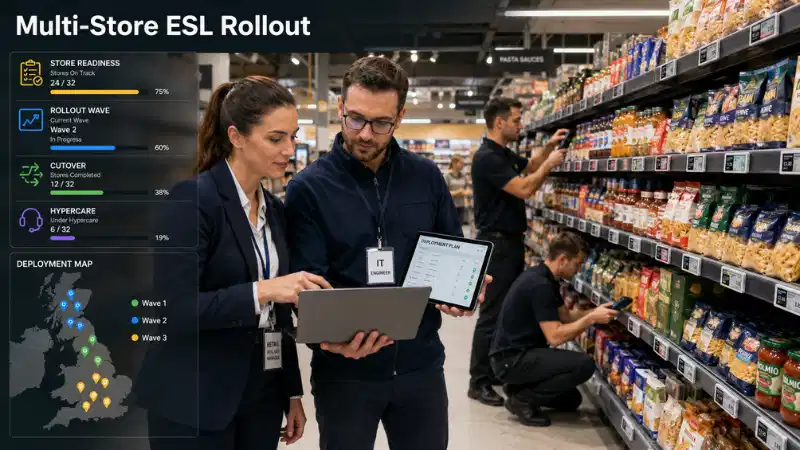
Start with one or two representative stores. Run them for three to six months. Collect real data. Reality often looks different from the projections.
On contracts: don't just fixate on label unit price. Base station ratios, software licensing terms, service response times, spare parts pricing, exit clauses-all of this matters. Fight for tiered pricing, price protection, and data portability.
ESL's current investment payback period is on the longer side. For most standalone supermarkets, it might not be a "worthwhile" deal at this stage. But for chain enterprises with dynamic pricing capabilities, those advancing omnichannel retail, or those facing significant labor cost pressure, it's still worth serious evaluation.